

How to choose tile adhesive correctly?
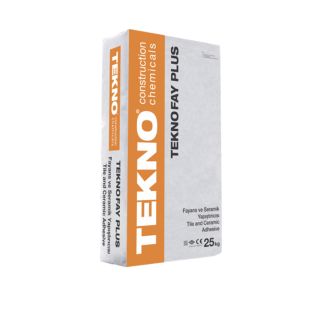
The quality of the cladding depends on many factors: material, compliance with technology, environmental conditions, and, of course, glue. It is the adhesive composition that is responsible for the durability of the coating, because even the most expensive and exquisite tile will not stick on the walls if you use a poor-quality or unsuitable solution. Today we will tell you in detail what to pay attention to when choosing tile glue, and consider a really high—quality glue that is recommended by the masters - Teknofay Plus C1TE (Teknofay Plus C1TE).
Tile Material The first thing you should pay attention to is the purpose of the glue.
The term "tile" implies the shape rather than the material of the cladding, and it can be ceramic, porcelain, marble, granite, natural or artificial stone, respectively. Once you have decided on the material of the cladding, you should proceed to the choice of glue. For example, Teknofay Plus C1TE is designed for gluing ceramics, travertine, mosaics and decorative bricks on horizontal and vertical surfaces. What to glue on
The second aspect that is important for a competent choice of glue is the surface on which it is planned to be applied.
The materials of the walls or floor can be different — concrete, plaster, ceramics, wood. Therefore, before choosing glue, it is worth finding out on which plane it will need to be applied. Teknofay Plus C1TE adhesive is designed to work with such surface materials as concrete, screed, plaster, and is also suitable for gluing ceramics onto ceramics.
Thermal stability and moisture resistance These criteria are extremely important if the tile will be glued in bathrooms, saunas, baths and other places with high humidity and air temperature.
The stability of the adhesive composition is also important when choosing an adhesive for exterior cladding, for example, the facade of a building or steps. Often, the thermal stability indicators are indicated on the packaging of the composition, for example, Teknofay Plus C1TE, they range from -40 ° C to 80 ° C. If these data are not indicated on the package, the adhesive is not suitable for exterior cladding work.