

Damper tape thickness
In this article, we will talk about the thickness of the damper tape. What does it look like? How do I choose a damping tape of the desired thickness? Is the thickness of the damping tape important?
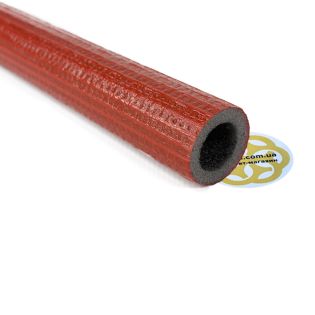
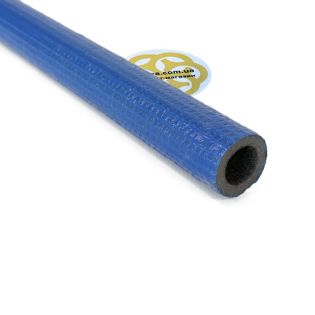
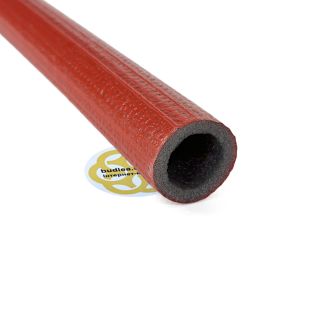
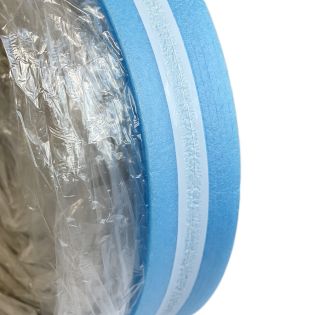
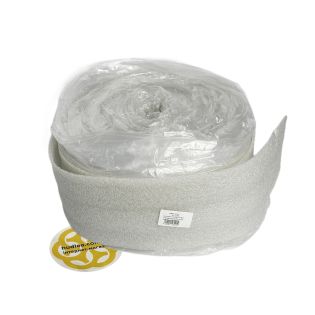
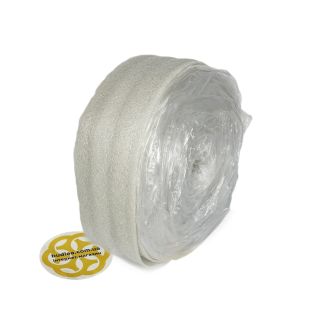
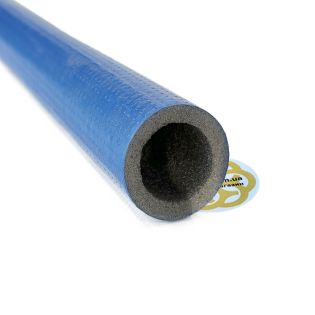
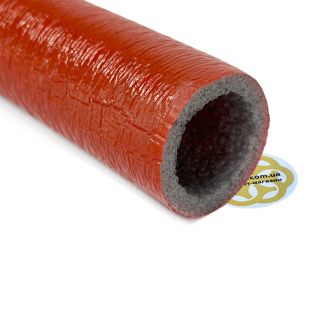
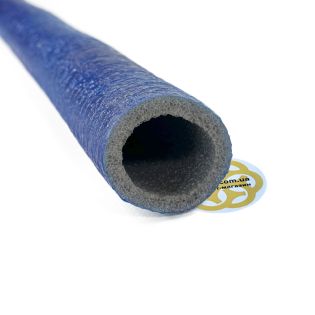
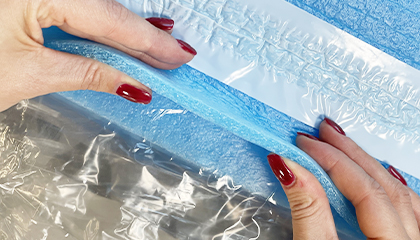 So, what is a damping tape and why it is needed, you can find out in our previous article. For those who are too lazy to read the entire article, let me remind you: the damping tape (aka: edge, wall, compensation, edge, etc.) is a strip of foamed polyethylene of different thicknesses (in our case 5, 8, 10 mm), to which an "apron" of polyethylene film is soldered on one side.
The edge tape is an interlayer between the wall and the screed and acts as a compensating element when the screed is expanded, thereby protecting the adjacent walls from cracking, reducing heat loss through the adjacent walls.
The material has been used for years by builders, installers, ordinary people who are faced with repairs, or rather with the filling of the screed. And during this time, he gained the trust of all the above-mentioned users.
Despite its popularity, not everyone knows why the edge tape is sold in different thicknesses?! And if there are different thickness options, does it mean that it affects something? Let's try to sort out the relationship between the thickness of the edge tape and the screed.
Choosing between a tape thickness of 5, 8 or 10 mm, you need to start from the floor heating area. If the area is up to 40m2, use a 5-8mm damping tape, if more than 40m2, a 10mm tape.
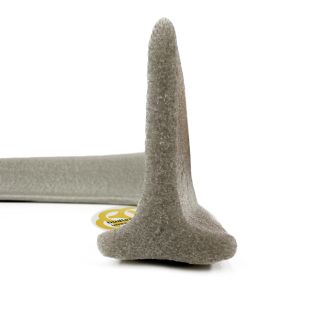
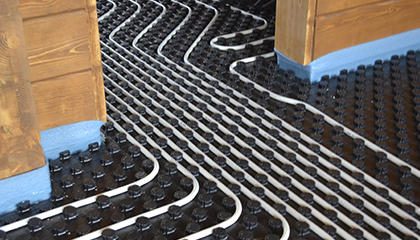 In addition, I want to remind you of one important nuance that concerns the laying of edge tape in rooms over 10m2. If the area of your room is more than 10m2, in order to minimize the internal stress inside the screed, you need to divide it into contours or, more simply, into uniform sectors ("maps"). In order to understand this better, I will give you an example. We have a room of 30 m2 in size. If it is laid along the perimeter with an edge tape and filled with a screed, then, as a result, the material will still not cope with the desired task, because the pressure will be too strong. Therefore, we need to divide our 30 m2 into three rectangles that are multiples of 10m2. In our case, these are three rectangles, which are separated by a T-shaped ribbon (an inter-contour ribbon). Thus, we have reduced the voltage on the damper belt. You don't have to worry about the quality of the screed, the stress is evenly distributed, which means we are not afraid of cracks and deformations.
Let's sum up the results! When choosing a damping tape, you need to take into account the thickness of the screed. But do not forget about the quadrature of the room, if it exceeds 10m2, we buy a few more meters of inter-contour tape to the damper, and provide ourselves with an ideal, even screed for a long time. If you need help choosing a tape or calculating its quantity, please contact us by phone.