

Sealing of sewer wells
Concrete rings are widely used for the installation of a sewage septic tank, both in industrial and private construction.
It is worth recalling that concrete rings and concrete elements are only part of the complex for the arrangement of a sewage septic tank, without the joint use of special mounting, protective and sealing materials, we will not solve more than one task. More precisely, we will face a lot of troubles, such as: leakage of fecal water into the ground and or groundwater entering the well (which is important when removing fecal water from the site, since the wells will be filled with water after each rain), pollution of the surrounding area, as well as the destruction of concrete under the influence of water and aggressive media.
This issue has been quite studied, and our recommendations are based on the provisions of regulations, such as: DBN V.2.5-75:2013-"Sewerage external networks and structures", as well as DSTU B V.2.6-145:2010-"Protection of concrete and reinforced concrete structures".
 And so, in order not to miss anything, let's start by defining the tasks that need to be solved to create full-fledged systems based on concrete rings:
- Sealing of joints between concrete rings and places of entry of communications is a complex of materials performing waterproofing and installation functions.
- External waterproofing is necessary to protect against the penetration of water (of any origin), aggressive media capable of penetrating into the interior of the well, as well as the protection of concrete itself, which is a fairly vulnerable material.
- Internal waterproofing is necessary to prevent leakage of water, sewage and fecal water and protect the same concrete.
The first thing we will encounter is the installation of individual elements; the joints are the most vulnerable point in terms of waterproofing, as well as the structural stability of the system. This is where we have to start work on waterproofing.
Mounting mix – used for the installation of prefabricated structures, structural repairs of concrete and reinforced concrete structures, sealing joints of structures. The mixture should have increased characteristics in relation to a simple sand-cement mortar, namely, have the following properties: increased wear resistance, water resistance, resistance to aggressive action of chlorides, sulfates, sulfides, oils and their derivatives, have good adhesion to concrete and metal, and also provides excellent mechanical resistance to bending and compression. Such mixtures include a cement composition consisting of special high-strength hydraulic binders, inert silica fillers, special additives and synthetic fibers.
The material is applied manually using a trowel and a spatula, to the seat of the concrete rings, starting with the bottom element, so that the composition would eventually create a full-bodied connecting layer with a thickness of 10 mm (to fulfill this condition, we use spacers). Provided that it is impossible to create a full-bodied connecting layer of 10 mm, we make the joint in the form of a U–shape with a widening to a depth of at least 20x20mm, filling it with a repair and installation mixture from the inside and outside of the well. If necessary, we repair chips, potholes, cavities, as well as other damages and defects of concrete rings with a repair and installation mixture.
Also, this section includes the sealing of the entry points of engineering networks, in its importance, this procedure is on a par with the protection of structural connections. The fact is that the materials from which the engineering networks are made, which are metal and plastic, have technical characteristics that differ from concrete, and over time, under the influence of the resistance forces of the materials, lag behind the concrete body, thereby depressurization occurs.
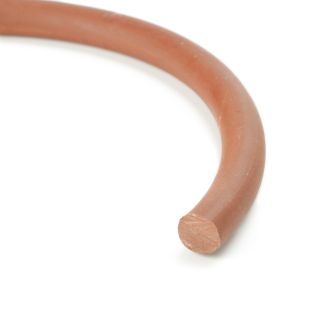
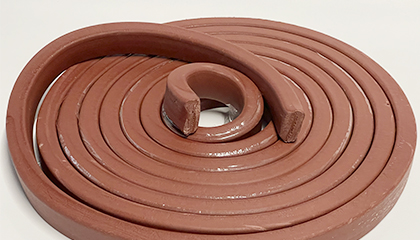
We wrap the incoming pipe and fix the bentonite cord, so that it would be in the center of the concrete base, then fill the voids with the mounting mixture. The condition is the distance between the pipe and concrete from 10mm. The next step will be sealing the expansion joints between the mounting mix (concrete) and the pipe (mortgage). For these purposes, we recommend a material with a high level of adhesion to various surfaces, as well as good strength and deformation characteristics of polyurethane sealant. For its application, it is necessary to make depressions around the pipe (mortgage) by 10-20 mm and to a depth of 5-10 mm, then apply a sealant.
External waterproofing - the task of such a procedure is to completely eliminate the contact of the outer walls of concrete with groundwater, respectively, preventing the penetration of liquids of various nature into the thickness of concrete and further into the interior of the structure.
Waterproofing is applied on the plane of the structure after processing the joints and sealing the entry points of engineering networks, so that the waterproofing layer would create a complete coating.
For these purposes, we recommend the use of several types of waterproofing, we list them in order of increasing technical and operational characteristics:
Bitumen–based waterproofing is the most economical and perhaps the easiest type of waterproofing to apply. The composition of the materials includes a mixture of various bitumen, rubber-like polymers and synthetic resins. It is used for waterproofing bases, including protecting structures from capillary moisture in draining soils, creating an anticorrosive coating of metal structural elements. It is applied both manually (brush, brush, spatula) and mechanized (sprayer) in a way. For uniform application of the insulating layer, the waterproofing coating should be reinforced with fiberglass.
Among the disadvantages, it is worth noting the fragility of the bitumen-based coating, as well as the dependence of the reliability of protection on the thickness of the applied layer (the number of layers applied) - the thicker the layer, the more reliable the waterproofing coating. In some ways, bitumen mastics modified with polyurethane resins are devoid of such disadvantages.
Polyurethane–based waterproofing has the advantages of ease of application similar to bitumen compositions, reliability and durability of cement-polymer compositions. Creates an elastic and durable film, cured by air moisture.
The waterproofing mixture of the booking action is one of the most affordable methods of reliable waterproofing, creating a very durable waterproofing outer coating to abrasion. However, it is inelastic and in the event of a crack in the base (concrete), the waterproofing will also be broken. It is characterized by the possibility of application on uneven surfaces, ease of installation, good durability, reasonable price. At the same time, the process is quite time-consuming.
Elastic cement-polymer mixtures are an excellent option for complex surfaces prone to cracking. They have high indicators of surface strength and elasticity. Usually a two-component waterproofing compound consists of a dry dispersed mixture based on special cements, mineral fillers, functional additives, including appreting ones. The second component is a polymer emulsion. Forms a seamless elastic waterproofing coating capable of containing and blocking microcracks. If necessary, glass mesh reinforcement is recommended.
Waterproofing of penetrating action is a dry mixture based on special cements, quartz sand, complex additives. The active chemical components of which penetrate deep into the concrete body, filling capillaries, microcracks and pores with insoluble crystals without passing water, even in the presence of high hydrostatic pressure. Waterproofing of this type will combine the advantages of ease of application, cost in relation to the guaranteed result.
It is strongly recommended to use the protection of the waterproofing coating against mechanical movements of the soil that occur both during backfilling and during the operation of the structure. For these purposes, a spike-shaped membrane is used - it is a diagonally depressed protective sheet made of HDPE (high-density polyethylene) to protect waterproofing materials, the spikes act as protection, partially absorbing the loads imposed on the waterproofing material. Overlap rolls are connected to each other, 20-30cm wide. Also, it contributes to the drainage of groundwater.
Internal waterproofing - the task of such a procedure is to completely eliminate the contact of the inner walls of concrete with drains, respectively, preventing the penetration of liquids into the thickness of concrete and further into the ground.
Waterproofing of the inner part of the sewer well is carried out with the above listed compositions:
- Polyurethane-based waterproofing
- Waterproofing mixture of the booking action
- Elastic cement-polymer mixtures
- Waterproofing of penetrating action
The use of polymer-mineral compositions capable of resisting the aggressive effects of acid vapors and their solutions released by household drains will be particularly appropriate for waterproofing the inner surface of sewer wells. Since every year in domestic wastewater, in addition to feces and other organic matter, from which it is relatively easy to clean them biologically in sewage treatment plants, the content of dangerous chemical pollutants increases.
If an active leak occurs, it is possible to eliminate it with the help of special fast-hardening compounds, after which the main waterproofing work is carried out.
High-quality waterproofing of concrete rings of the sewer well will increase the service life of the structure, protect it from destruction and deformation, and simplify its maintenance.
Additional products


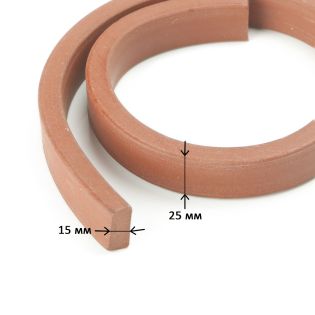

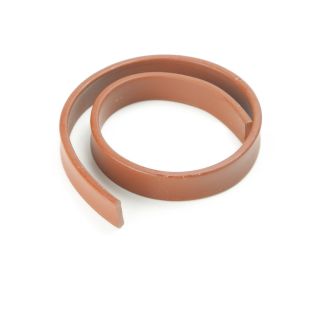 Bentonite cord 5x20 mm for waterproofing and sealing the entry of communications, 5 r.m.
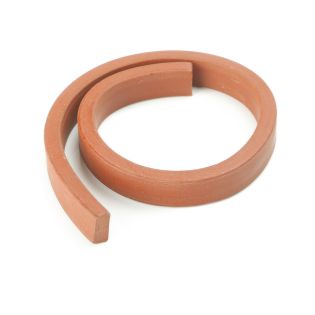
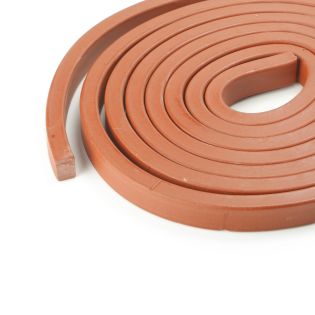 Bentonite cord 20x30 mm for waterproofing and sealing working joints, 5 r.m.