

What waterproofing to choose for the bathroom
Modern construction standards require that waterproofing of walls and floors with special moisture-resistant materials be carried out before finishing in rooms with high humidity. It will be much cheaper to take care of high-quality waterproofing than paying for repairs to neighbors from below or pumping out water in case of a water pipe break and flooding. Waterproofing of the bathroom also reduces the risk of mold and mildew formation, water seeping into the screed, as well as minimizing other destructive consequences from constant contact of surfaces with water.
Important areas in the bathroom where waterproofing is neededThe most optimal solution would be to cover the entire floor surface with a waterproofing material with an entrance to the walls of at least 30-50 cm.
It is also necessary to treat the walls in those places where a shower cabin, a bathtub, a sink, a toilet and other plumbing will be installed. Experts recommend applying a waterproofing mixture in places where plumbing is installed at least 50 cm up and on the sides.
The distance may be longer, but the most important thing is to determine the boundaries where there will be the greatest probability of water getting on the finish. A reasonable solution would also be the complete isolation of the plumbing cabinet, where the water risers are hidden. They are the most common cause of leaks.
What to use for waterproofing?The most affordable and easy–to-use material is a coating waterproofing.
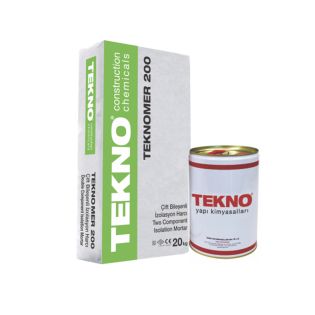
Special attention should be paid to cement-polymer waterproofing compounds, which are easy to apply, dry quickly and create a durable protective layer that protects surfaces from moisture. Such waterproofing can also be used for minor repairs of cracks and elimination of leaks in concrete floors. Great for applying under tiles. Teknomer 200 Crystallized will be a good choice.Teknomer 200 Crystallized is a two–component waterproofing of the penetrating type.
 The mixture protects the walls and floor from positive and negative water pressure. Before use, it is necessary to mix the dry component A (cement-based powder) and the liquid component B (polymer emulsion).Waterproofing can be applied to both horizontal and vertical surfaces (screed, plaster, brick, concrete, gas block), so it is perfect for the bathroom.
 In addition , she:
- It has a high degree of adhesion with a surface acceptable for application.
- Prevents carbonation of concrete floors due to moisture exposure.
- Does not provoke the formation of corrosion on metal fittings inside reinforced concrete.
- It is immune to constant temperature changes.
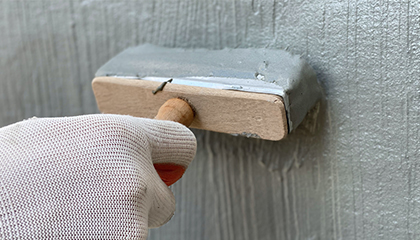
- It is easily applied with a roller or a flat brush, does not spread, does not crack after drying.
Waterproofing is recommended to be applied in 2-3 layers to create a dense high-quality coating.