

How to avoid mistakes when installing a ladder
In order to minimize the risk of malfunctions (which are difficult to eliminate after installing a drainage system), it is worth investing in high-quality materials and entrusting installation work to an experienced, proven specialist.
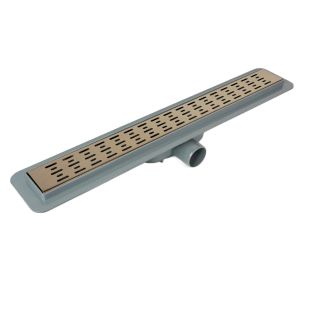
The sewer ladder (drain pipe) must be installed with a slope of at least 1,5% towards the sewer riser. The tray is supported by special legs, with which it can be installed at the desired height and level. The upper surface of the grate should be 1-2 mm below the tile level.
If the bathroom has a warm floor, make sure that the siphon is at least 30 cm away from the heating pipe. Otherwise, it will dry out and pass an unpleasant smell from the sewer. After connecting all the components of the system, perform a leak test.
For effective drainage of water into the sewer, the floor should have a small (2.5%) slope towards the gutter. It is formed after pouring the tray from about a 5-centimeter layer of screed placed in the formwork.
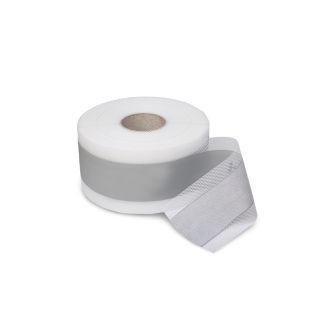
Depending on the location of the channel, the slope can be one-way or two-way (in the latter case, the throughput will be better). When the screed hardens, a special tape is sealed around the gutter flange, and then waterproofing with acrylic mastic using a roller or brush, according to the manufacturer’s instructions. It should cover the entire bathroom floor and plastered shower walls to a height of at least 1.5 m.
The final stage of the work is the implementation of tiling. The tile is laid on the side of the water drain, and a highly elastic adhesive or solution is used for gluing onto the liquid insulation.
It is recommended to use polymer cement grout to fill the seams — it is very durable, elastic and waterproof. The tile in the shower should be non–slip, and in the place of installation of the cabin — also smooth (without protruding decors).
Additional products
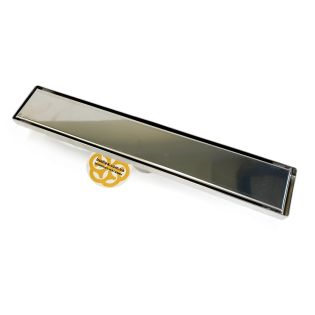


 Shower drain CLASSIC BLACK 60 cm, horizontal, rain grate, black + hygienic shower AS A GIFT