

Foundation waterproofing
Why do I need waterproofing of the foundation? High-quality waterproofing of the foundation helps to protect the building from groundwater, dampness, capillary moisture, meltwater, snow, aggressive salts and acids in the soil, etc. Dampness and moisture in the foundation negatively affects the strength and thermal insulation characteristics of the entire structure. Properly and qualitatively performed waterproofing works of the foundation will significantly extend the service life of the entire structure, and will eliminate many problems during its operation.
There are many different types of foundations: monolithic, band, pile, columnar and screw. Regardless of the type of foundation chosen, they all equally need protection from the harmful effects of water – waterproofing. At the stage of foundation construction, the use of bentonite cord will be an excellent solution. Its use in the areas of joining elements of basement floors, basements, foundations, as well as other underground parts of buildings. It securely and firmly adheres to the concrete surface, fills seams, junctions and the smallest voids in the concrete body, forming a reliable protective layer.
Do I need waterproofing of the foundation in the absence of a basement? The decision on the need for a complex of waterproofing works depends on: the type of foundation, type of soil and groundwater level. Even if there is no basement in the building, the creation of a moisture-proof layer is always necessary. Most often, coating waterproofing or hydrophobic impregnations are used, the advantages of which include an optimal budget and convenient technology of application. Also, penetrating mixtures and injection formulations are used for waterproofing the foundation, however, their cost is higher, and the technology of application is more complicated.
There are three types of waterproofing used to protect the foundation:light or penetrating waterproofing
 It is used for foundations that are located on disconnected soils, but above the groundwater level, which do not imply constant contact of the foundation of the structure with water.
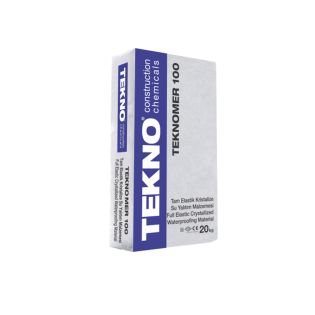
The purpose of such waterproofing is to protect the structure from capillary moisture that accumulates in the pores of the soil (Performed by materials: Teknomer 100).
medium waterproofing It is used for foundations erected on cohesive soils that prevent the filtration of rain and melt moisture entering from the atmosphere and thus retain water.
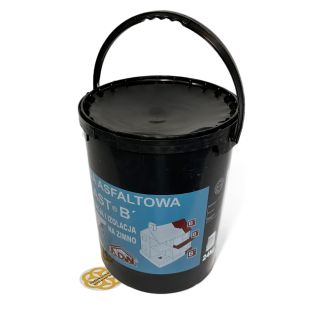
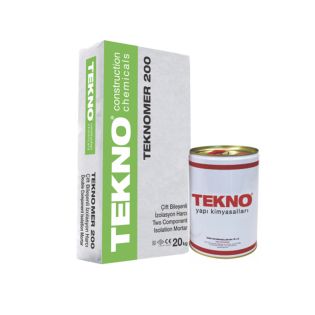
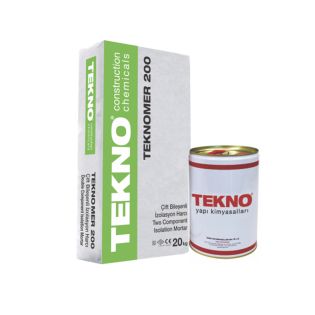
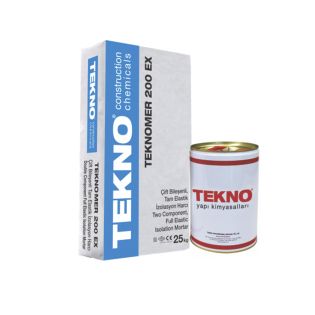
There is periodic contact of accumulated atmospheric water, which exerts hydrostatic pressure on the foundation walls. You can use both polymer-cement (Teknomer 200) and bitumen-rubber (Izoplast B) materials.
For example, Teknomer 200 provides the coating with its waterproofing and protective properties, suitable for concrete, brick, cement and stone surfaces. The surface is highly resistant to the corrosive effects of salt water and protects concrete from carbonation. By filling and sealing all the pores in the surface, this waterproofing coating forms an indissoluble bond with the base
heavy waterproofingIt is used in cases when there are high-lying groundwater on the site of the constructed building, which exert constant hydrostatic pressure on the foundation walls.
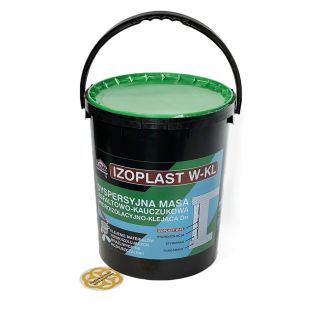
Such waterproofing should provide reliable protection of the structure, which is exposed to constant contact with soil and groundwater. As such protection, the use of bitumen-rubber mastic will be an excellent solution Izoplast W-KL.
 Medium and heavy waterproofing are anti-pressure types of protection, which implies the need to isolate the foundation from constant contact with water and regular moisture absorption. The purpose of these types of waterproofing is to provide hermetic and mechanically strong insulation of the underground parts of the structure from the hydrostatic pressure of groundwater. Most often, it is more expedient to apply a comprehensive waterproofing method using polymer membranes, roofing materials and reinforcing coatings made of synthetic resins.What you need to pay attention to when choosing a method of waterproofing the foundation
At what stage is the foundation: in the process of building a new one or repairing an existing foundation that is already in operation
The choice of technology for waterproofing the foundation depends on the stage at which it is carried out.
The repair of the foundation is technologically more limited compared to its construction, since it is not possible to carry out external waterproofing of the foundation itself. The process of digging it out will lead to a significant increase in the cost of repairs, as well as an increase in the time of repair work. It is more expedient and more reasonable to deal with the arrangement of waterproofing at the construction stage than with the repair of an already operated foundation. For example, the use of a complex additive in concrete, bentonite cord, the use of bitumen or polymer-cement waterproofing at the stage of foundation construction are reliable and durable ways to protect against water penetration.
If it is not possible to apply these types of waterproofing, since the structure has already been built and is in operation, then penetrating, cement and coating waterproofing is used. This approach will be the most practical and profitable to solve this problem.
What tasks and loads waterproofing should cope with.In order to choose the right type of waterproofing, it is necessary to conduct a full assessment of the building site on which the foundation is or is planned to be erected.
To assess the quality of the soil, the depth and degree of freezing of the foundation, the presence or absence of a basement, the presence of groundwater and the amount of water during precipitation and thawing.
Selection of materials for waterproofingThe modern market of building materials is overflowing with offers of various products from many manufacturers.
These include rolling, coating, penetrating and booking compositions. To make a choice of a particular type of materials, you should familiarize yourself with the main advantages and disadvantages of the most common types of waterproofing and choose exactly the material that is ideal for your specific case
Summing up, it should be said that waterproofing is a set of measures that prevent premature destruction of a structure and ensure its protection from excess moisture. It is used not only as a tool to eliminate the already existing problem of water penetration, but also as a preventive measure to create a protective barrier against moisture ingress in the future. Competent waterproofing of the foundation with high–quality materials is the key to long-lasting and reliable operation of any structure, both in private and industrial construction.