

Terrace waterproofing
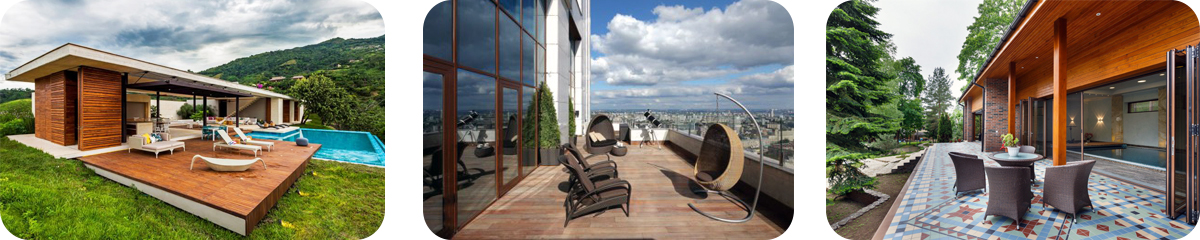
Today, terraces, exploited roofs and open balconies decorate not only country houses, but increasingly they can be found in many new residential complexes of the city. The terrace is an outdoor recreation area, the architecture and arrangement of which is very diverse: multi-level or flat, with or without a roof, with a fence or semi-open, etc.
Regardless of the structural features of your terrace or the roof being operated, they are all exposed to environmental factors: direct sunlight and UV, precipitation, wind, temperature changes, etc. If at the design stage no measures were provided to protect the structure from external destructive processes, then after a few years cracks, mold, signs of corrosion may appear on the surface of the terrace or the upper cladding and decorative coating will be damaged. And in the operated room located under the terrace, wet corners, mold or other destruction will appear.
That is why a very important condition for protecting the premises located under the terrace, the terrace itself and extending the service life of the entire structure, it is necessary to provide high-quality waterproofing. After all, not only the overall aesthetic appearance, but also the operational characteristics of the structure will depend on the level of reliability of waterproofing and a properly arranged drainage system.
Next, we propose to understand in detail all the subtleties of waterproofing works and consider the most suitable materials that are used today for high-quality protection of terraces from environmental factors. If you are interested in balcony waterproofing, you will be interested to read our other article, where we described in detail the features of balcony waterproofing.
However, what should be done if the waterproofing was not equipped earlier, and the first signs of destruction appeared on the already operated terrace. We propose to consider the most effective ways to protect and restore the terrace from destruction and return it to its former coziness and comfort.
To date, there are a huge variety of methods and materials for the arrangement of waterproofing terraces. Despite everything, the key factors remain the quality of the materials used and the level of qualification of specialists who carry out waterproofing work. Therefore, it is very important to make the right choice and in this we will try to help you further in the article.
The choice of a particular material should be carried out taking into account the characteristics of the terrace itself: its location (basement, above the living room or around the pool, etc.), the type of material for the terrace (concrete, wood, stone, tile, etc.), the presence of several levels, stylistic features of the building. It should be noted that the level terrace located above the living room, in addition to waterproofing and drainage system on its surface, also requires insulation with a vapor barrier.
Wooden terraces and verandas generally do not require the construction of a foundation due to the lightness of their construction. They can be built directly on the ground or raised above the ground on supports to ensure air circulation. However, the best solution for a wooden terrace is a columnar foundation. As a protection against the destructive influence of moisture, hydrophobic and protective impregnations are used for such terraces, which prevent the rotting of wood and provide protection from UV radiation. Under the floor of such a terrace, a drainage system should be equipped to remove excess rain and melt water.
Clinker and paving slabs are quite popular material for the arrangement of terraces of country houses. This is a budget option for the arrangement of a recreation area and landscaping of the site. The installation technology is quite simple, and the lining coating can be laid directly on a "pillow" of sand, filling the seams between the tiles with a cement mixture.
Protection from the influence of water for this type of terraces is to treat their surface with hydrophobic compounds that will give the surface water-repellent and antiseptic properties.
Now consider the terraces with a concrete base. Such terraces can be found both in suburban areas and in the city: in shopping malls and multi-storey buildings. As a rule, residential premises or operated buildings are located under them, therefore, the arrangement of reliable and high-quality waterproofing is a prerequisite for ensuring comfort and long-term service of the entire structure.
 First of all, you should check your terrace for the presence of a slope from the wall of the house, which must be mandatory, since it prevents the accumulation of puddles of water on the surface of the terrace. Such a check is easy to carry out with the help of the construction level. The optimal slope value should be about 1.5 - 2%. If you have not found a slope, then it can be done by arranging an additional layer of concrete screed, calculating the permissible load and thickness.During the waterproofing of the terrace, the area to be protected and treated is the floor base, where the waterproofing arrangement will be carried out.
However, before starting any waterproofing work, it is necessary to thoroughly prepare the foundation.
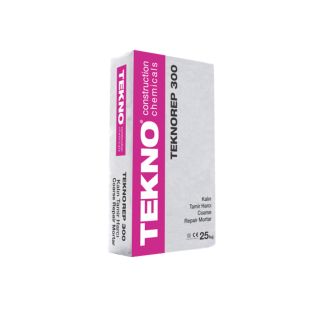
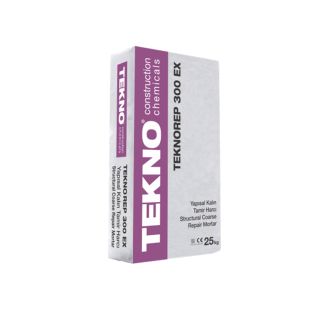
On a concrete base, all irregularities, cracks, sinks and damaged areas on the surface should be repaired with a repair compound. For this purpose, the thixotropic compositions Teknorep 300 and Teknorep 300 EX can be used.Next, the surface must be cleaned of dirt, dust and oils that can reduce the level of adhesion of the material to the surface.
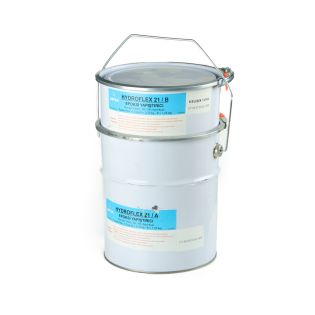
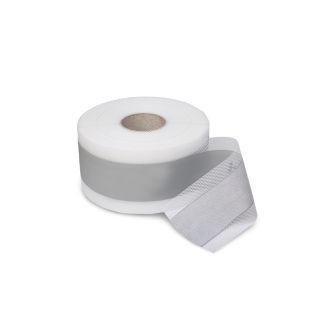
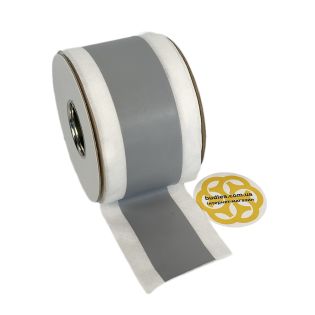
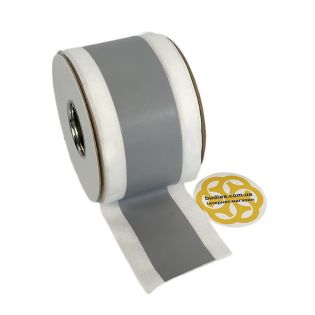
Regardless of the type of waterproofing chosen, special attention is paid to the most vulnerable places of the base – corners, wall abutments, as well as expansion joints. All these places are additionally sealed with a special sealing tape. The TEKNOMER PAH BAND 120/70 sealing tape, as well as a system for sealing joints, have long been proven and reliable materials that are used in waterproofing works Hydroflex. Such waterproofing accessories are attached to a special adhesive or cement membrane to the base.
Now let's look at the main types of waterproofing that are most often used to create waterproofing of a level terrace:coating liquid waterproofing
- cement-based plaster waterproofing
- penetrating waterproofing
- roll waterproofing
Coating liquid waterproofing is a mastic or a liquid mass, which, after being applied to the surface, forms a seamless waterproof coating. Our experts recommend using Teknomer 300 EX acrylic mastic.
One-component acrylic polymer-based mastic is applied with a brush or roller to a surface that has previously been properly prepared. Penetrating into the body of the base, it will increase its hydrophobic properties, strengthen and de-dust the surface, significantly increasing the level of adhesion. To create a high-quality waterproofing coating, it is enough to apply a membrane in 2 layers. In this case, the second layer should be applied perpendicular to the first. After the waterproofing layer has completely dried, it is possible to lay ceramic tiles or other facing material.
Plaster waterproofing is represented on the market by cement and polymer-cement mixtures. The advantages of this type of waterproofing include increased mechanical strength, crack resistance, the formation of a wear-resistant waterproof coating, the absence of shrinkage, as well as the ability to protect metal elements from corrosion.
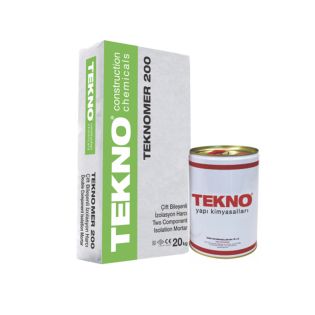
A two-component Teknomer 200EX membrane will be an excellent choice for waterproofing the terrace.
This material forms an elastic polymer-cement waterproofing coating, which allows you to maintain the integrity of the protective layer even with seasonal soil movements, when the risk of cracks in concrete structures increases. The material should be applied to a moistened surface that has been previously well cleaned and properly prepared. Facing material can be laid on a completely dried waterproofing layer.
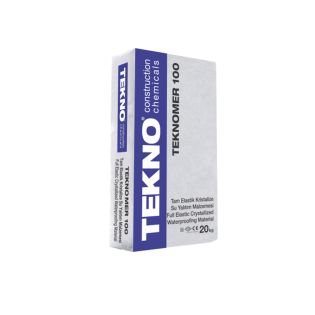
A popular material of this type of waterproofing is Teknomer 100, which is quite often used in both industrial and civil construction.
It should be noted at once that the penetrating composition is applied to a well-moistened base, which means that it is not advisable to use it on the terraces under which the operated room is located. After all, in the process of saturating the concrete surface of the terrace with water, you can flood the room under it.
Today, high-quality roll waterproofing, which is used to protect terraces and exploited roofs, includes membranes based on PVC, EPDM and TPO (FPO). These materials differ in their chemical composition, characteristics and conditions in which they can be operated. Bitumen roll materials are considered an inexpensive and unreliable method of waterproofing, largely inferior to the quality and durability of other membranes. Therefore, they are used less and less often at objects in the field of waterproofing.
PVC membranes are made on the basis of plastic polyvinyl chloride. The quality of the composition of such membranes is determined by their service life and the integrity of the protective layer. The advantages of this material as waterproofing for terraces include its service life (from 25 years, depending on the composition). It should be said that during the installation of membranes, the seams are hermetically sealed with hot air with special equipment (welding dryer or automatic machine). This requires additional time and money if you want to do waterproofing on your own. In addition, PVC membranes are characterized by fragility at low temperatures, which excludes their use in regions with a cold climate.
EPDM membranes are made on the basis of synthetic rubber and polymer fibers. Polymer roll materials are designed for countries with a cold climate, as they have a high index of resistance to environmental conditions. They are characterized by high elasticity and durability. The technology of laying membranes is quite simple, thanks to the elasticity of the material. However, to create a reliable and completely sealed waterproofing coating, the use of special self-adhesive tapes, adhesives, sealants, fasteners and additional materials for waterproofing the junctions is required. In addition, the installation of membranes and sealing joints on vertical and wet surfaces is technically more difficult.
Summing up, it should be said that the work on waterproofing terraces and exploited roofs requires great professionalism, because it is much more difficult to remake poor-quality waterproofing than to initially create it at a high level. Mistakes made or the choice of poor-quality material, as a result, leads not only to the loss of the aesthetic appearance of the structure, the appearance of mold and mildew, corrosion of metal structural elements, but also the destruction of the foundation itself.
When choosing materials for waterproofing terraces, experts recommend selecting products from the same manufacturer's line, since they have chemical compatibility and higher adhesion. The choice of materials and all necessary calculations should be done before the start of the actual work on the arrangement of waterproofing of your terrace.
If, after reading the article, you have not yet decided on the optimal work option and the most suitable type of materials, our specialists will be happy to advise and help you make all the necessary calculations.
Additional products


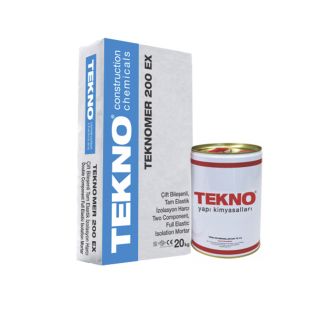 Elastic polymer-cement waterproofing Teknomer 200 EX with high resistance to positive water pressure, 20kg + 10l
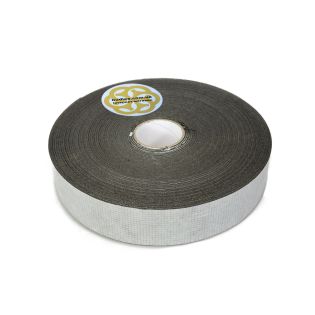
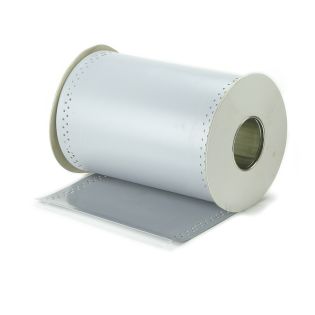 Perforated TPE Hydroflex tape for waterproofing expansion joints and cracks, width 150 mm, thickness 1.5 mm, 5 r.m.
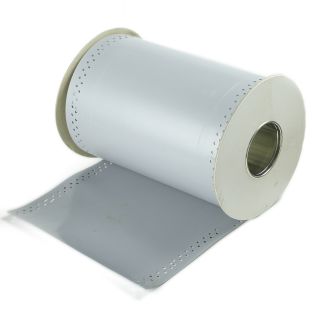 Perforated TPE tape Hydroflex for waterproofing expansion joints and cracks 200 mm wide, 1.5 mm thick, 5 r.m.
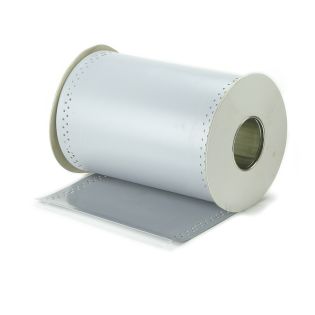 Perforated TPE Hydroflex tape for waterproofing expansion joints and cracks, width 300 mm, thickness 1 mm, 5 r.m.